
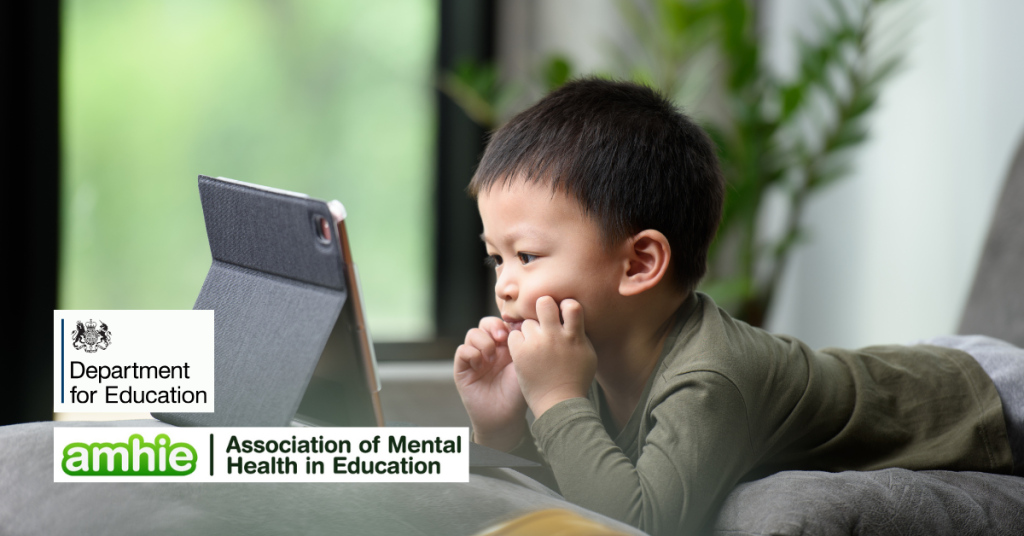
The DfE release ‘Children of the 2020s’ research brief
Lily Blakeledge
January 2026
As educators and Mental Health Leads, we are often on the frontline of the shifting developmental landscape. A recent research brief from the Children of the 2020s study, titled Home Learning Environment and Screen Time at Age 2, offers a sobering look at the early childhood experiences of the cohort currently heading toward our nursery and reception classrooms.
The findings present a clear challenge for the AMHIE community: how do we prepare for a generation of learners shaped by record-high screen usage and a widening gap in home learning support?
The Data: A New Digital Norm
The study, which surveyed over 8,500 families, highlights a significant shift in how toddlers spend their time. While the World Health Organization (WHO) recommends no more than one hour of screen time daily for 2-year-olds, the reality is starkly different:
- Daily Usage: 56% of 2-year-olds use screens every single day, with only 2% having no screen exposure at all.
- The 140-Minute Average: On average, 2-year-olds spend 140 minutes a day on digital devices—nearly two and a half times the recommended limit.
- The Trend: Only 34% of toddlers today (2020s) meet the WHO screen time guidelines, a drop from 46% a decade ago.
The Link to Mental Health and Learning
For schools, the most critical takeaway isn’t just the quantity of screen time, but its correlation with developmental outcomes. The research identifies a “double burden” for children in lower-income households, who often experience higher screen time alongside a less active Home Learning Environment (HLE).
- Emotional & Behavioural Risks: Roughly 25% of the children studied scored above the threshold for possible emotional or behavioural problems.
- Vocabulary Gaps: Higher screen time and lower HLE scores were directly associated with lower vocabulary scores at age 2.
- The Caregiver Connection: The study found a strong link between caregiver mental health and child outcomes. Parents experiencing depression or anxiety were more likely to report higher child screen time and a greater likelihood of their child facing emotional challenges.
What Schools Need to Do: A Call to Action
This data isn’t just a “home issue”—it is a school readiness issue. When these children arrive at our gates, the “vocabulary gap” and “regulation gap” will already be entrenched. Here is how schools can respond:
1. Reclaim the “Language-Rich” Environment With 2-year-olds spending over two hours a day on screens, schools must double down on oral language interventions. Ensure Early Years settings are “screen-free” zones that prioritise back-and-forth interaction to counteract the passive nature of digital consumption.
2. Targeted Parental Support for HLE The research shows that only 32% of the lowest-income families read to their children daily, compared to 77% of the highest-income families. Schools should move beyond just “sending books home” and instead offer workshops that model how to engage in the Home Learning Environment, focusing on low-cost, high-impact activities like singing, storytelling, and play.
3. Early Identification by Mental Health Leads Mental Health Leads should use this data to refine their early identification triggers. If a child enters school with significant regulation or communication delays, practitioners should consider the home digital diet and caregiver wellbeing as part of a holistic assessment.
4. Supporting the “Whole Family” Given the link between caregiver anxiety/depression and child screen time, schools must act as hubs for family wellbeing. Strengthening ties with local health visitors and providing “low-stigma” mental health signposting for parents can improve the child’s environment before they even reach the classroom.
Final Thoughts
The “Children of the 2020s” study reminds us that the digital world is a permanent fixture in our students’ lives. However, it also reaffirms that the fundamentals of human development—conversation, reading, and stable adult mental health—remain the greatest predictors of success. By understanding these trends now, we can ensure our schools are ready to support every child, no matter their digital starting point.
Would you like to keep up to date with mental health research and guidance?
We offer free membership to educational settings and individuals in the education sector designed to offer support, information and updates on mental health in education in the UK and beyond. To join as a free member, complete the two minute form on our free membership page.
