
Why Psychological Flexibility Is a Superpower for Young People
By Nic Hooper
January 2026
Growing up today can feel overwhelming. Young people are navigating school pressure, social media, family expectations, changing identities, and a world that rarely slows down. It’s no surprise that stress, anxiety, and self-doubt are so common. One skill has been shown to make a powerful difference across all these challenges: psychological flexibility.
Psychological flexibility is the ability to stay present, adapt to what life throws at you, and keep taking steps toward what really matters, even when thoughts and feelings are uncomfortable. Instead of trying to eliminate stress or “fix” emotions, flexible people learn how to respond wisely rather than react automatically.
This skill is especially important for young people because that developmental period is defined by intense emotions and rapid change. Developing psychological flexibility early on in one’s life provides a foundation for lifelong wellbeing, resilience, and meaningful goal-setting.
The DNA-V Model: A Map for Flexibility
One of the most engaging and youth-friendly ways to teach psychological flexibility is through the DNA-V model. This model, based on Acceptance and Commitment Therapy (ACT), turns complex psychological ideas into practical everyday skills.
DNA-V stands for Discoverer, Noticer, Advisor, and Values.
Discoverer is the part of you that explores, experiments, and learns by doing. It’s about trying new things, making mistakes, and staying curious. When young people avoid challenges because they fear failure, the Discoverer goes quiet. Re-awakening this part builds confidence and courage.
Noticer is your awareness system. It helps you notice what’s happening inside your body and mind, and what’s happening around you. By learning to notice emotions, tension, or excitement without immediately judging them, young people become better at handling stress and regulating big feelings.
Advisor is the inner voice that gives commentary: “I’m not good enough,” “This will go wrong,” or sometimes, “You’ve got this.” The problem isn’t having an Advisor (everyone does!) but believing everything it says. DNA-V teaches young people to recognise thoughts as just thoughts, not facts.
Values answer the question: What kind of person do I want to be? Values are not goals like getting good grades or being popular. They are qualities such as kindness, creativity, bravery, or honesty. Values provide direction when life feels confusing or painful.
Why This Matters
When young people learn DNA-V, they gain a simple language that helps them to understand and make sense of their inner world. They learn that uncomfortable feelings don’t have to control their actions. They learn that mistakes are part of growth. And most importantly, they learn how to choose behaviour that is in line with what truly matters to them.
Psychological flexibility is not about being calm all the time or never struggling. It’s about moving forward with awareness and purpose, even when things are hard. In a fast-changing world, it may be one of the greatest gifts we can offer the next generation.
About the Author: Nic Hooper
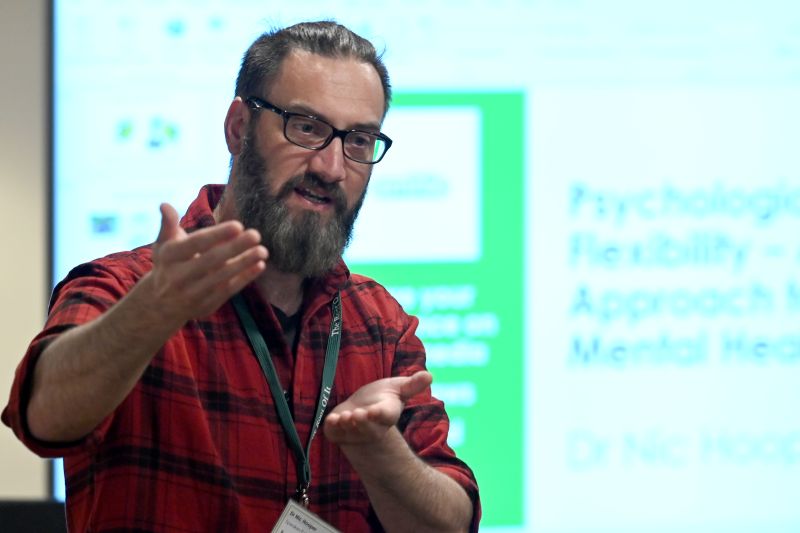
Nic is an expert in clinical psychology who is employed primarily as a Senior Practitioner and Research Lead at Enable Inclusion Trust, where he works with families and schools to ensure the best outcomes for young people having wellbeing struggles in education. Nic also provides consultancy in various forms (workshops, trainings, wellbeing events, writing support, research analysis and coaching), lectures at Cardiff University and spends a fair amount of time writing. For example, Nic has authored many scientific articles, book chapters, and magazine articles, and has written five books. Nic is also a co-director of Connect (which is a psychological flexibility wellbeing curriculum for primary schools), and he regularly uploads videos to his popular Youtube Channel (Dr Nic Analyses).
Get in touch with Nic: nichooper7@googlemail.com
Access Connect Curriculum: http://www.connectcurriculum.org/ (you can sign up but full services are not yet live) Connect is a global, evidence-based wellbeing curriculum for children aged 4 to 11. It’s completely free! No payment details taken. No catch. Give your pupils better wellbeing skills today.
Want to be kept in the loop about new guest bloggers?
AMHIE offers free membership to educational settings and individuals from an educational background so that they can stay up to date with all news and content relating to mental health in education. To complete the 2 minute form and join us visit our free membership page.
